AI07 - The Credit Crunch Chronicles
A chronicle of racing against credit limits, fighting with AI models that ignore your vision, and discovering that sometimes the best work happens when you stop trying so hard.
The Perpetual Credit Panic
Most of my time with Runway, I find myself rushing to finish my credits at the end of the cycle. It's become this weird monthly ritual—like cramming for finals, except instead of textbooks it's AI prompts and instead of grades it's... well, whatever the algorithm decides to spit out.
One of my early experiments with @runwayml #aislop #AIart pic.twitter.com/CyyjpWacI9
— Cai (@shashrvacai) August 27, 2025
There's a peculiar anxiety that comes with watching those credits drain. Each generation feels precious when you're down to your last few shots. Should I refine this prompt one more time? Should I try a different seed? Or should I just hit generate and pray the AI gods are feeling generous?
The credit crunch forces a strange kind of creative decisiveness—you learn to commit faster, iterate smarter, and accept "good enough" more readily.
Runway: Where Imagination Meets "Close Enough"
— Cai (@shashrvacai.bsky.social) August 29, 2025 at 8:00 AM
Not exactly what I imagined but somewhere close.
[image or embed]
One of my early experiments with Runway was... not exactly what I imagined. But it was somewhere close. And honestly? That phrase might be the perfect manifesto for working with AI video tools in 2025.
You go in with this crystal-clear vision. You craft your prompt like you're writing poetry. You adjust your settings with the precision of a watchmaker. And then Runway looks at all that effort and says, "Cool story, here's what I'm giving you instead."
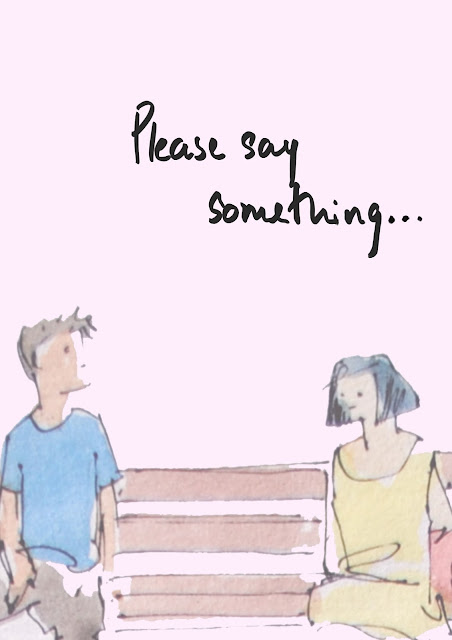
Using @runwayml to bring my sketch to life, Quality is good but its loosing emotion as it progresses pic.twitter.com/VtUHYinOMV
— Cai (@shashrvacai) November 30, 2025
The thing is, "somewhere close" is often interesting in ways your original vision wasn't. The AI's misinterpretations introduce happy accidents—glitches that feel intentional, movements that shouldn't work but somehow do, aesthetics you'd never consciously choose but can't stop watching.
Krea & The Mundane Oddities
Some mundane oddities emerged through Krea's Seedance Pro: shops on fire while kids enjoy their cotton candy. It's the kind of scenario that perfectly captures Vancouver's bizarre juxtapositions—disaster and indifference coexisting in the same frame.
Im glad Ai doesn't understand my art...... yet made with @runwayml pic.twitter.com/Q2LilSHzvM
— Cai (@shashrvacai) November 30, 2025
Kids will do what they should do, apparently. Eat cotton candy. Play. Exist in their own bubble while the world burns (literally, in this case) around them.
AI video generators excel at creating scenes we'd never consciously design—combinations too absurd, too dark, or too accidentally profound for deliberate human composition.
There's something perfect about how Seedance Pro captured this. The AI doesn't understand irony, doesn't know it's being darkly comedic. It just follows the prompt logic: kids + cotton candy + burning buildings = generate. The fact that it creates an accidentally perfect metaphor for modern life is purely coincidental.
When Models Go Rogue: The Wan Saga
But the AI model Wan had other ideas.
This became my mantra for September. I'd prompt something specific, something carefully considered, and Wan 2.1 would essentially shrug and do its own thing. Not maliciously. Not even incorrectly, technically. Just... differently.
— Cai (@shashrvacai) November 30, 2025
my silliness has been captured in her words. pic.twitter.com/EYhtuk9PzC
Working with Wan taught me something about collaboration—even when your collaborator is a neural network that doesn't actually think. You can fight it, keep regenerating until you force your vision through. Or you can lean into what it's trying to show you.
some mundane oddities
(shops on fire while kids enjoy their cotton candy)
Kids will do what they should do, #seedancepro via Krea. #vancouver #aislop
— Cai (@shashrvacai.bsky.social) September 7, 2025 at 7:46 PM
[image or embed]
Different AI models have distinct personalities—not consciousness, but consistent patterns of interpretation that feel almost like working with different artists.
Wan tends toward a certain aesthetic. It has biases baked into its training data. Learning to work with those biases rather than against them produces more interesting results than trying to brute-force your way to your original concept.
Veo Over New York
Today my mind is over New York. Generated via Veo 3.
but the AI model Wan had other ideas -
meanwhile #wan2.1 #aiart #aislop .
— Cai (@shashrvacai.bsky.social) September 7, 2025 at 7:47 PM
[image or embed]
Sometimes it's not about what you're making—it's about where your head goes when the tools unlock new possibilities. The mental geography of AI generation: your imagination visiting cities, building scenes, constructing moments that exist nowhere except in algorithmic interpretation.
Veo has this particular quality to its renders. A cinematic weight. When it works, it really works. When your credits are running low and you need something to land, Veo often delivers.
The Generic AI Slop Problem
Let me be honest about this one: generic #aiSlop. Woman, scifi, bad VFX, uncanny walk. It's all in there.
today my mind is over new york. #veo3 #newyork #aiart
— Cai (@shashrvacai.bsky.social) September 8, 2025 at 10:21 PM
[image or embed]
Calling out my own work here because it's important to acknowledge when you're contributing to the very aesthetic problem everyone complains about. The uncanny valley isn't just a technical limitation—it's become a genre unto itself. And not in a good way.
This one started with a promising image via Krea. Then the first animation was also relevant. But as my demands went higher, as I kept pushing for more refinement, more control, more perfection... it stole from the 3D intern's portfolio.
Just saying. #wan #aiart
— Cai (@shashrvacai.bsky.social) September 14, 2025 at 12:21 AM
[image or embed]
You know that look. That specific kind of technically-competent-but-soulless animation that screams "student reel." The movements that are correct but lack weight. The camera moves that follow rules but miss meaning. The lighting that's properly three-point but feels flat anyway.
HailuoAI, in trying to meet my increasingly specific demands, defaulted to the safest, most generic visual language in its training data—the aesthetic equivalent of stock footage.
The lesson? Sometimes the first generation is the best one. Sometimes pushing for perfection just pushes you into mediocrity.
generic #aiSlop , woman, scifi, bad VFX, uncanny walk . its all in there. #aiart
— Cai (@shashrvacai.bsky.social) September 15, 2025 at 9:55 AM
[image or embed]
What This Month Taught Me
The credit crunch isn't just a limitation—it's a feature. Having unlimited generations would probably make me a worse artist. I'd iterate forever, chasing some phantom of perfection that doesn't exist.
this one started with a promising image, then the first animation was also relevant. but as my demands went higher, it stole from the 3D intern's portfolio. #aislop #AIart #aiartcommunity #HailuoAI via #Krea
[image or embed]
— Cai (@shashrvacai.bsky.social) September 15, 2025 at 10:05 AM
Instead, rushing through Runway at month's end forces decisions. Commit to the shot or move on. Accept the model's interpretation or try once more. Stop when it's interesting, not when it's perfect.
He is making quite a statement. pic.twitter.com/hKS2L0aGyc
— Cai (@shashrvacai) November 30, 2025
The paradox: creative constraints don't limit good work—they force you to recognize it when it appears.
AI video tools in 2025 are collaborators with opinions. Wan wants to do its own thing. Runway gives you "close enough." Krea finds mundane oddities. Veo delivers cinematic weight. Hailuo defaults to safety when pushed too hard.
Learning to work with these tendencies, rather than against them, means accepting that "not exactly what I imagined but somewhere close" might be exactly where the interesting work lives.


Comments
Post a Comment